



News Center
What are the Advantages of Acrylic Material?
Release Date: 2025-12-25
As a substitute for glass, acrylic (PMMA, polymethyl methacrylate) is widely used in modern industry and daily life due to its unique physical and chemical properties. Its core advantages can be summarized as follows:
1. Excellent Optical Performance
High light transmittance: Over 92%, superior to ordinary glass (about 80–90%) and close to optical glass transparency, often called "plastic crystal."
Soft and uniform light diffusion: Minimizes glare, making it ideal for lightboxes, light guide panels, etc.
2. Outstanding Mechanical Properties
Lightweight yet strong: Density is only 1.18 g/cm³ (about half that of glass), but impact resistance is 7–10 times greater than ordinary glass, reducing breakage risk.
Good toughness: Resists complete shattering upon impact, enhancing safety.
3. Strong Weather Resistance and Stability
Aging resistance: Withstands outdoor exposure well, resisting yellowing and fogging while maintaining optical and mechanical performance (high-quality products can last over 10 years).
Chemical resistance: Resists weak acids, alkalis, alcohol, cleaning agents, etc., making it easy to clean and maintain.
4. Excellent Processability
Easy shaping: Can be thermoformed, vacuum-formed, or injection-molded into complex shapes (e.g., curves, spheres).
Easy cutting and engraving: Suitable for laser cutting and CNC engraving to create detailed patterns and custom shapes.
Easy bonding: Seamless bonding with specialized adhesives enables high-strength, integrated designs.
5. Safety and Environmental Benefits
High safety: Fragments are less sharp than glass, reducing injury risk; some grades meet flame-retardant certifications.
Recyclable: As a thermoplastic, it can be recycled, aligning with modern environmental standards.
6. Aesthetic Appeal and Decorative Versatility
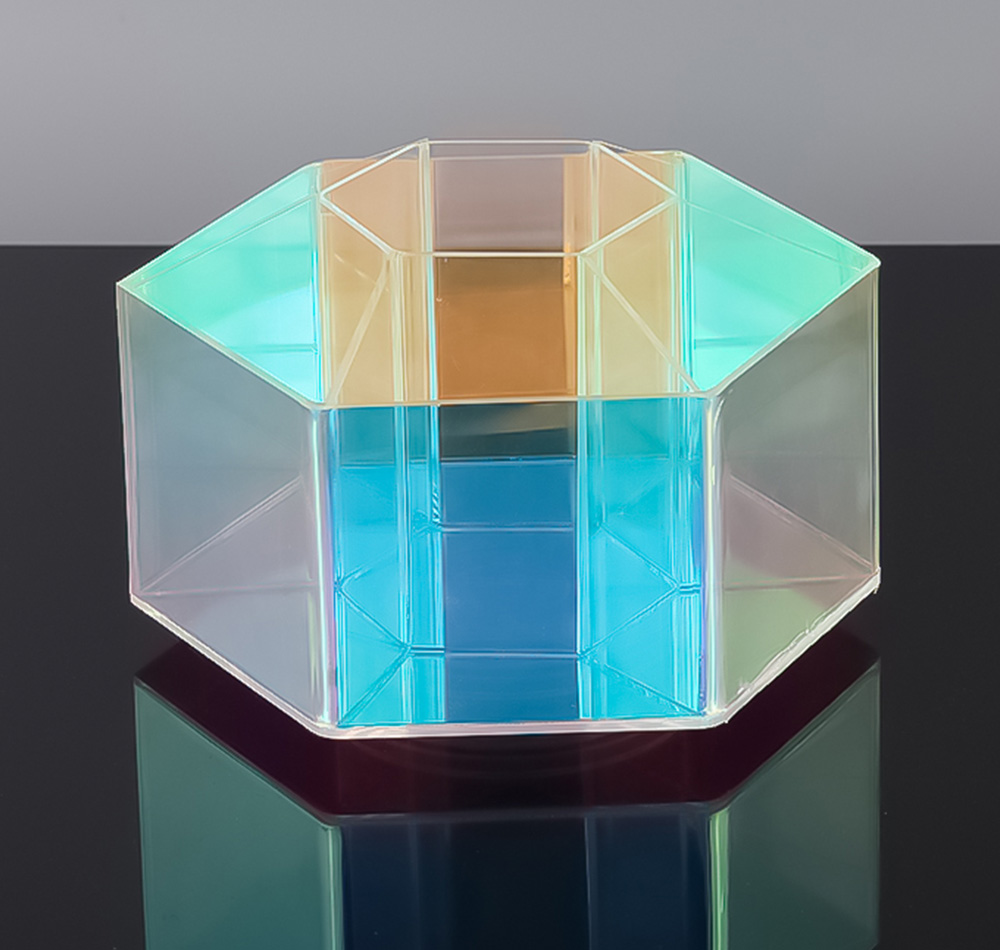
Rich color options: Can be dyed into vibrant transparent, translucent, or opaque colors to meet diverse design needs.
High surface gloss: Naturally glossy, offering a premium visual effect.
Amenable to secondary processing: Polishing, screen printing, spraying, electroplating, etc., enhance decorative outcomes.
7. Good Electrical Insulation
Suitable for electronics and electrical applications, such as instrument panels and insulating components.
- Previous: Reasons Why Acrylic Display Cabinets Are Superior to Wooden Display Cabinets
- No more!